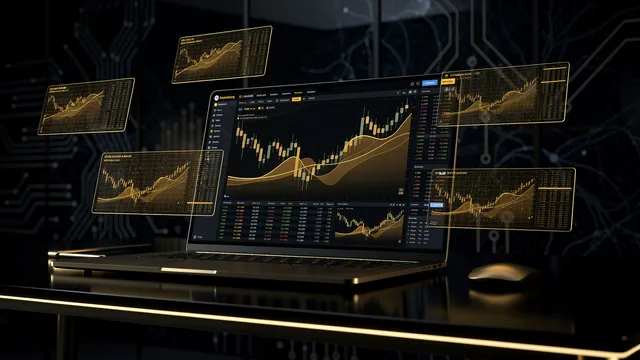
Gold trading platforms vary more than their marketing suggests. Spreads, execution speed, regulatory status, and fee transparency differ substantially between providers — and those differences compound into real money over time. This guide covers what to look for and how leading platforms compare on the metrics that matter.
Introduction to Gold Trading
Investors engage with gold through two main approaches: owning physical bullion or trading contracts tied to its price movements. See also: gold trading basics. Each carries distinct risks and rewards.
Physical ownership means acquiring coins, bars, or certificates. See also: whether ETFs or physical gold suit you better. The appeal is tangible — you hold the asset directly, with no counterparty. The drawbacks are storage costs, insurance, and slower liquidity. Contracts for Difference (CFDs), by contrast, allow speculation on price shifts without handling metal. They offer flexibility and leverage, but that leverage is also the reason accounts lose funds when markets move unexpectedly.
Common mistakes include ignoring geopolitical influences, reacting impulsively to volatility, or skipping position sizing discipline. Even accurate predictions can produce losses when stop-loss orders are absent or leverage is set too high.
Demo accounts are useful for newcomers. Testing strategies with virtual funds builds confidence before real capital is at risk. Seasoned traders also use demos to stress-test approaches in calm markets before deploying them under pressure.
Why Gold Has Held Its Value for Centuries
Precious metals have anchored portfolios across centuries of economic upheaval. During the 2008 crisis, gold surged 25% while stocks plummeted — a pattern repeated in 2020’s market chaos. Between 2000 and 2020, gold prices rose over 500%, outperforming many major indices.
This resilience comes from gold’s dual role: a store of value and an inflation hedge. When currencies weaken, investors move toward tangible assets. Even during dips — like 2013’s 28% drop — recovery followed within three years.
Modern tools amplify access. MetaTrader 4’s custom indicators help spot trends; cTrader offers depth-of-market data. Allocating 5-15% of a portfolio to gold typically buffers against equity crashes.
[Investofil] – The Best Broker and Trading Platform
Investofil bridges physical gold ownership with digital trading, offering UK investors storage partnerships with LBMA-approved vaults. Users can buy and sell allocated bullion with 0.3% transaction fees — 60% lower than industry averages. Real-time audit reports give physical holders ongoing visibility into their holdings.
|Feature | Physical Gold | Digital Contracts | |Storage Costs | 0.15% annual (insured) | N/A | |Liquidity | 24h settlement | Instant execution | |Leverage Options | 1:1 | Up to 1:500 |
The platform’s interface supports one-click switching between spot prices and futures markets. Advanced users can connect via API for custom algorithmic strategies. Mobile integration covers 98% of functions on iOS and Android, with biometric login and push notifications for price thresholds.
For derivatives traders, spreads start at 0.8 pips. For physical holders, vault-to-portfolio tracking is built in. Both groups use the same account.
“Investofil’s dual approach removes historical barriers between physical and digital markets.”
– Financial Times Commodities Report
Physical Gold Trading vs Gold CFDs
Owning physical metal means holding allocated bars or sovereign-minted coins. Insured storage typically costs 0.25%-1% annually. Selling through dealers might take 48 hours versus instant digital transactions.
|Factor | Physical Holdings | CFD Contracts | |Ownership | Direct title to asset | Price speculation only | |Leverage | None (1:1) | Up to 1:30 | |Costs | Storage + insurance | Spreads + overnight fees | |Market Access | Limited by location | 24/5 global pricing |
CFDs let traders profit from both rising and falling prices. Leveraged positions amplify risks — a 5% drop with 1:20 leverage wipes out the entire margin. As FCA guidelines warn: “CFD losses often exceed deposits.”
Many investors use both. Physical assets anchor long-term strategy; CFDs hedge short-term volatility. Tax implications differ: UK capital gains tax applies to bullion profits over £6,000, whereas CFD gains face income tax rates.
“Choosing between physical and paper gold isn’t about right or wrong – it’s about aligning tools with financial objectives.”
– Margaret Haynes, Chartered Financial Analyst
Key Features of Modern Gold Trading Platforms
Interface and Customisation
Platforms like MetaTrader now feature drag-and-drop functionality, letting traders arrange charts and indicators to match their workflow. Customisable dashboards surface preferred metrics — from live gold prices to geopolitical news feeds. AI-driven layouts can adapt based on trading habits, bringing relevant data forward during volatile periods.
|Feature | Desktop | Mobile | |Customisation Options | Unlimited widgets | Pre-set templates | |Market Access | Multi-screen analysis | One-touch orders | |Tools Available | Full CFD suite | Core functions |
Mobile and Web Access
Web platforms sync progress across devices; apps cover 98% of desktop features. Cloud-based systems process CFD trades in 0.4 seconds — 60% faster than 2020 averages. Real-time alerts ensure traders don’t miss price thresholds when away from their desks.
Evaluating Gold Trading Costs
Charting and Technical Analysis
Real-time spot price tracking lets traders act on micro-trends during volatile sessions. Advanced systems overlay geopolitical event calendars onto live charts, revealing correlations between news and price swings. Popular tools include:
- Fibonacci retracements for identifying support and resistance zones
- Bollinger Bands measuring market volatility
- Customisable moving averages for filtering noise
Basic charting is free on most platforms; backtesting and AI-driven forecasts may require subscription upgrades. Some brokers offset these costs through volume-based discounts for active accounts.
Integrated news feeds from Reuters or Bloomberg provide context for price movements, while economic calendars flag potential market-moving events. Demo accounts remain the most practical way to test approaches before live execution.
Customer Support and Educational Resources
When David, a Bristol-based investor, hit unexpected margin calls during Asian trading hours, his broker’s 24/7 live chat resolved the issue in 12 minutes. That responsiveness turned a potential £2,800 loss into a manageable adjustment.
|Service Type | Availability | Benefit | |Live Chat | 24/5 | Instant query resolution | |Video Tutorials | On-demand | Strategy visualisation | |Webinars | Weekly | Market trend analysis |
Educational resources reduce costly errors. Interactive courses explaining futures versus spot markets help traders pick the right instrument. One London-based firm reported 41% fewer error-induced losses after introducing mandatory new-user modules.
AI-driven learning tools are increasingly common. These adapt content to user progress, targeting weak spots like risk calculation or technical indicator interpretation. Platforms combining rapid support with deep learning resources see 67% higher client retention.
Consider these advantages when comparing platforms:
- Dedicated account managers for high-volume traders
- Backtest simulators using historical gold price data
- Multi-language support expanding market access
Advanced Platform Features
In 2024, a London-based fund manager used API integrations to automate 80% of their precious metals portfolio. Conditional order triggers, algorithmic backtesting, and dynamic risk thresholds are now standard features on leading platforms — rather than premium add-ons.
|Traditional Features | Innovative Upgrades | |Basic stop-loss orders | AI-driven dynamic risk thresholds | |Static charts | Interactive volatility heatmaps | |Manual trade entries | Algorithmic strategy backtesting |
Custom plugins extend functionality further. Third-party developers build risk dashboards that aggregate margin exposure across accounts. One popular add-on analyses decades of gold price data to identify cyclical patterns, improving entry accuracy by 22% in beta tests.
API connectivity suits institutional users. Bespoke algorithms that adjust positions based on live inflation reports or mining output forecasts close the gap between human analysis and market speed.
What’s Changing in Gold Trading Platforms
Three trends are reshaping how investors interact with gold: hyper-personalised mobile experiences, AI-driven predictive analytics, and blockchain-backed verification systems.
Platforms now prioritise one-touch execution and biometric security. AI tools analyse decades of price data in milliseconds, offering real-time strategy adjustments during Fed announcements or mining strikes. Blockchain verification for physical bullion transfers, smart contracts for ETF dividend automation, and cross-platform APIs linking currency markets with commodity derivatives are all in active development.
- Blockchain verification for physical bullion transfers
- Smart contracts automating dividend payments on gold-backed ETFs
- Cross-platform APIs linking currency markets with commodity derivatives
Younger demographics are pushing demand for ESG-aligned products, prompting platforms to introduce carbon-neutral vaulting options. 43% of institutional traders now blend physical holdings with crypto-gold hybrids — a figure that’s been rising as central banks explore digital currency integrations.
“The lines between tangible assets and digital tokens will blur within five years. Platforms ignoring this convergence risk obsolescence.”
– Dr. Eleanor Voss, Fintech Futures Report
Providers must balance innovation with regulatory compliance, as FCA guidelines continue evolving to address algorithmic trading risks.
How to Choose: The Key Criteria
Three things matter most: transparent fee structures, real-time analytics, and FCA-regulated security. Platforms that perform well on all three let investors respond to volatility rather than be caught by it.
Technology helps, but it doesn’t replace discipline. AI-driven charting and sub-0.5-second mobile execution are only useful when paired with consistent risk management. Blending physical holdings with CFD positions — rather than relying entirely on one approach — gives portfolios more flexibility when USD volatility shifts global valuations.
When comparing platforms, check spread differentials and verify broker regulatory status on official registers before depositing anything.
FAQ
What distinguishes physical gold trading from CFDs?
Physical trading involves owning tangible assets like bullion or coins, requiring storage and insurance. CFDs (contracts for difference) let traders speculate on price movements without owning the asset, often using leverage. Physical ownership offers long-term security; CFDs provide flexibility for short-term strategies.
How do I avoid losing capital when markets fluctuate?
Implement stop-loss orders to limit potential losses and diversify across assets. Reputable brokers like Investofil offer negative balance protection, ensuring accounts don’t fall below zero. Regularly monitor positions and avoid over-leveraging, especially during volatile periods.
What confirms a broker’s regulatory legitimacy?
Check registration with authorities like the FCA (UK) or ASIC (Australia). Licensed brokers publish regulatory IDs on their sites and segregate client funds. Avoid firms without transparent licensing or those operating in unregulated jurisdictions.
Can I execute trades effectively on mobile devices?
Leading platforms offer iOS and Android apps with full functionality, including real-time charts, order types and risk management tools. Ensure your chosen provider maintains responsive design and security protocols across all devices.
Why do spreads matter in contract-based trading?
Spreads — the difference between buy/sell prices — directly impact profitability. Tight spreads reduce entry costs, particularly for frequent traders. Compare providers: some offer fixed spreads for stability, while others adjust them based on market liquidity.
How does leverage affect precious metal positions?
Leverage amplifies both gains and losses. For example, 1:50 leverage means £1 controls £50 of exposure. While useful for capital efficiency, it requires strict risk controls. EU and UK regulators cap leverage for retail clients to protect against excessive losses.
What educational resources support new participants?
Established brokers provide webinars, eBooks and market analysis tools. Investofil’s academy covers technical indicators, macroeconomic factors influencing prices and portfolio strategies. Demo accounts allow practice without financial risk.
Are blockchain technologies influencing bullion markets?
Yes. Tokenised gold products now enable fractional ownership via distributed ledgers. Some platforms integrate AI-driven price forecasting, while others use smart contracts for instant settlements — trends enhancing accessibility and transparency.
Why consider bullion during currency instability?
Historically, precious metals retain value when fiat currencies depreciate. They’re inversely correlated with equities during crises, making them effective hedges. Central bank reserves still hold substantial bullion, reflecting its enduring role.
What research tools aid in forecasting price movements?
Platforms supply advanced charting packages with Fibonacci retracements and RSI indicators. Reuters or Bloomberg feeds offer real-time news. Seasonal pattern analyses and COT (Commitment of Traders) reports help identify market sentiment shifts.
How do tax implications differ between asset types?
Physical ownership may incur capital gains tax upon sale. CFDs, classified as spread betting in the UK, are tax-free but banned in some regions. Always consult local regulations — tools like TaxScouts integrate with major platforms for clarity.